E-submission
 KOTA
 TOTA
 TOTS

Articles
- Page Path
- HOME > > Volume 0; > Article
- Case Report Physeal distraction for physeal bar detachment in a 10-year-old boy in Korea: a case report
- Yong-Uk Kwon, Dae-Hyun Park, Dong-Yun Lee
-
DOI: https://doi.org/10.12671/jmt.2026.00178
Published online: September 16, 2026
Department of Orthopedic Surgery, Busan Paik Hospital, Inje University College of Medicine, Busan, Korea
Received: 16 April 2026 • Revised: 2 July 2026 • Accepted: 2 July 2026
- 0 Views
- 0 Download
- 0 Crossref
- 0 Scopus


Abstract
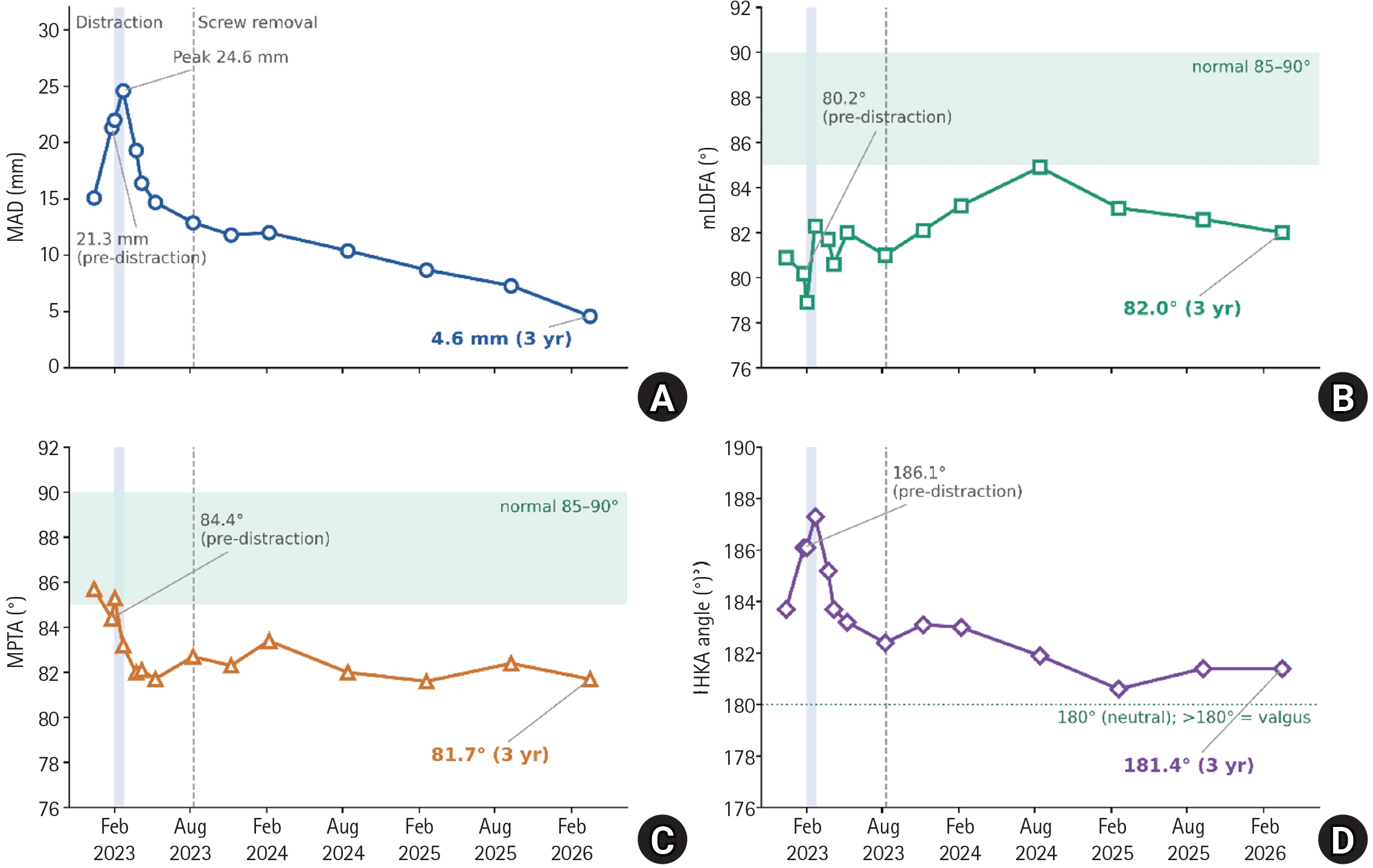
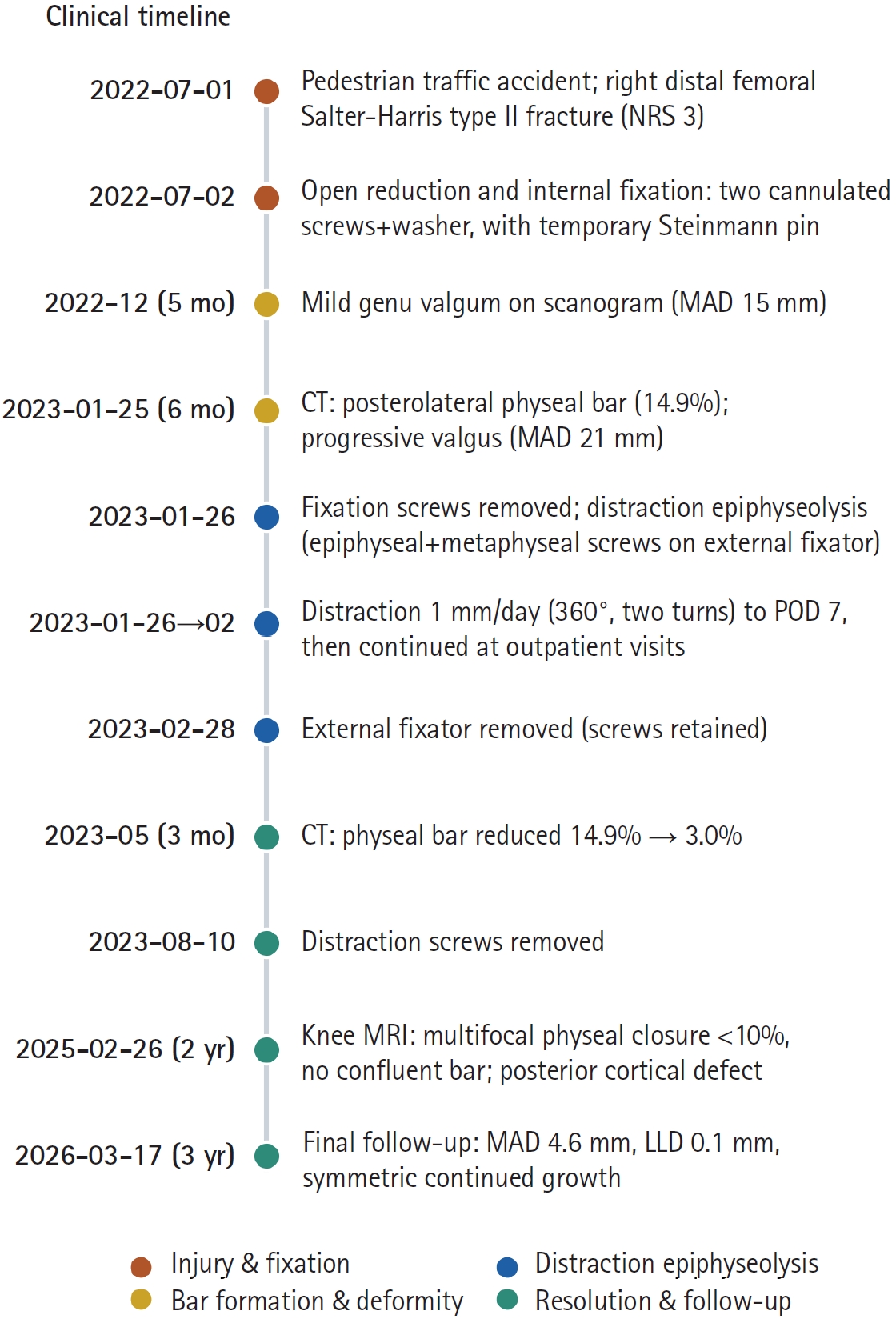
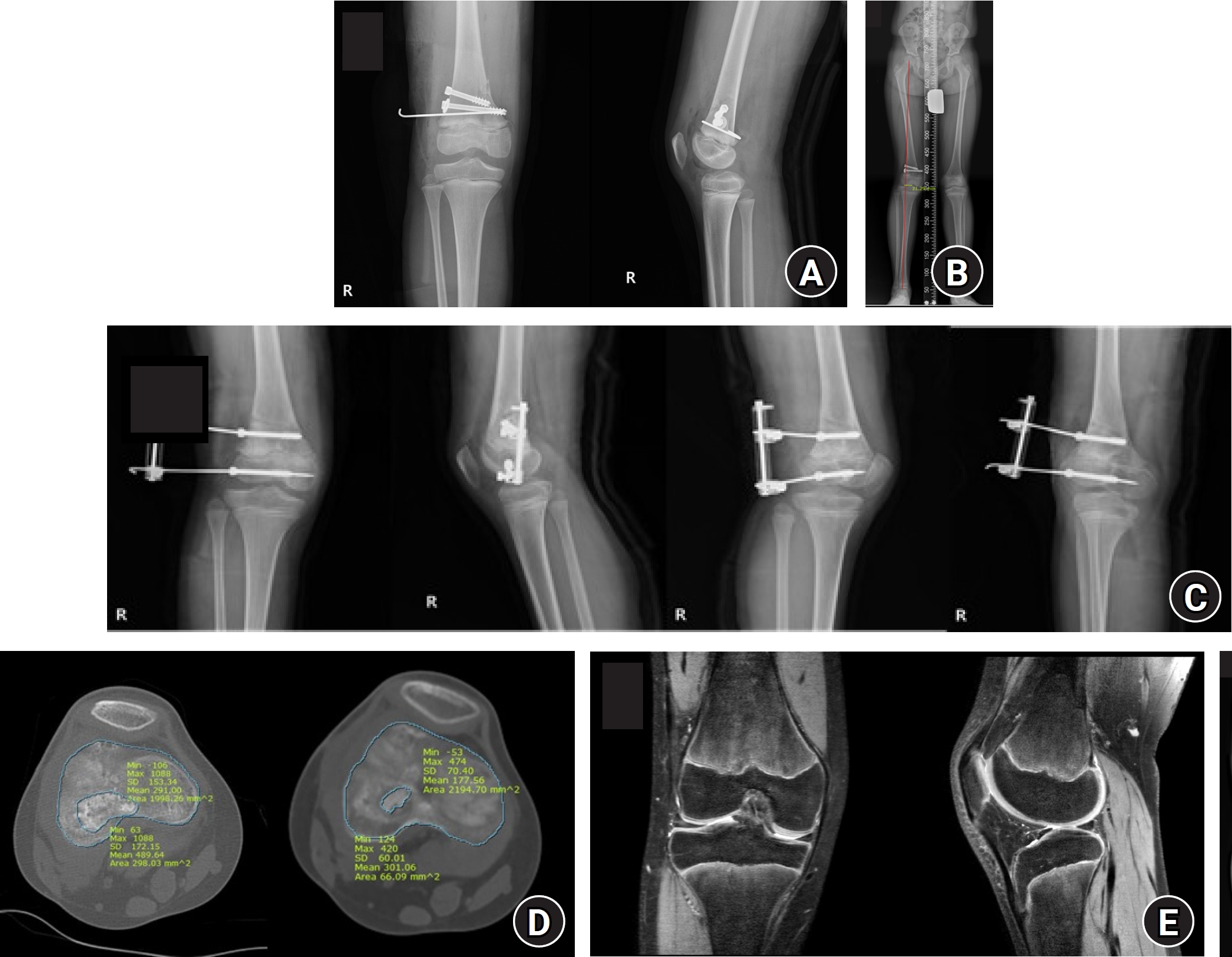
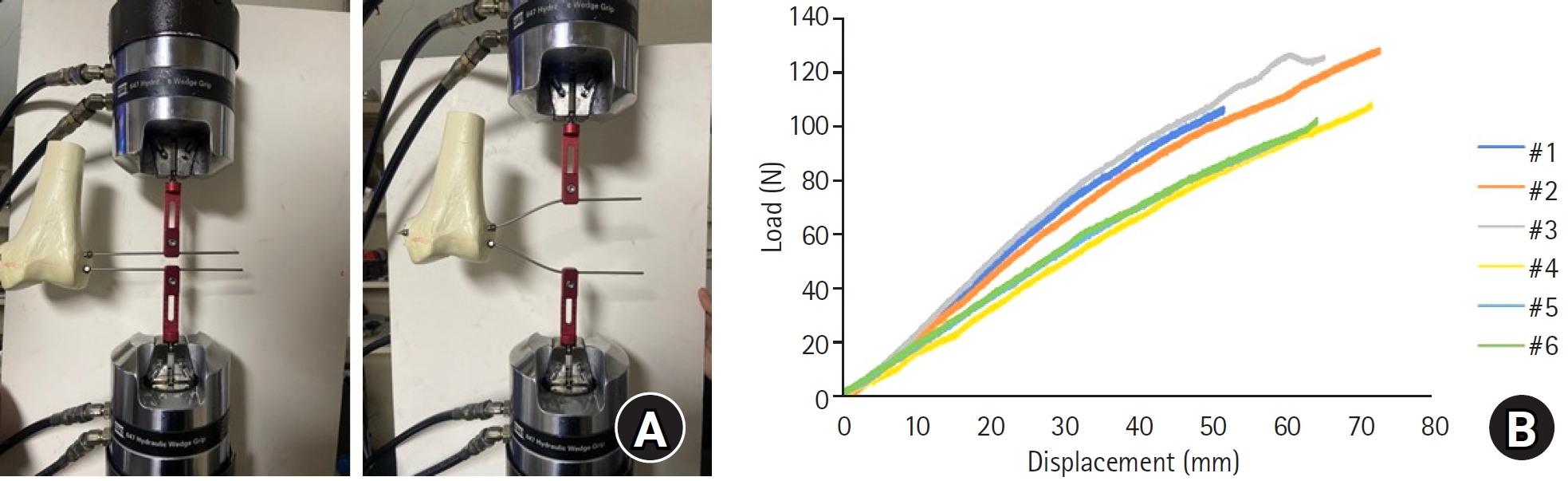
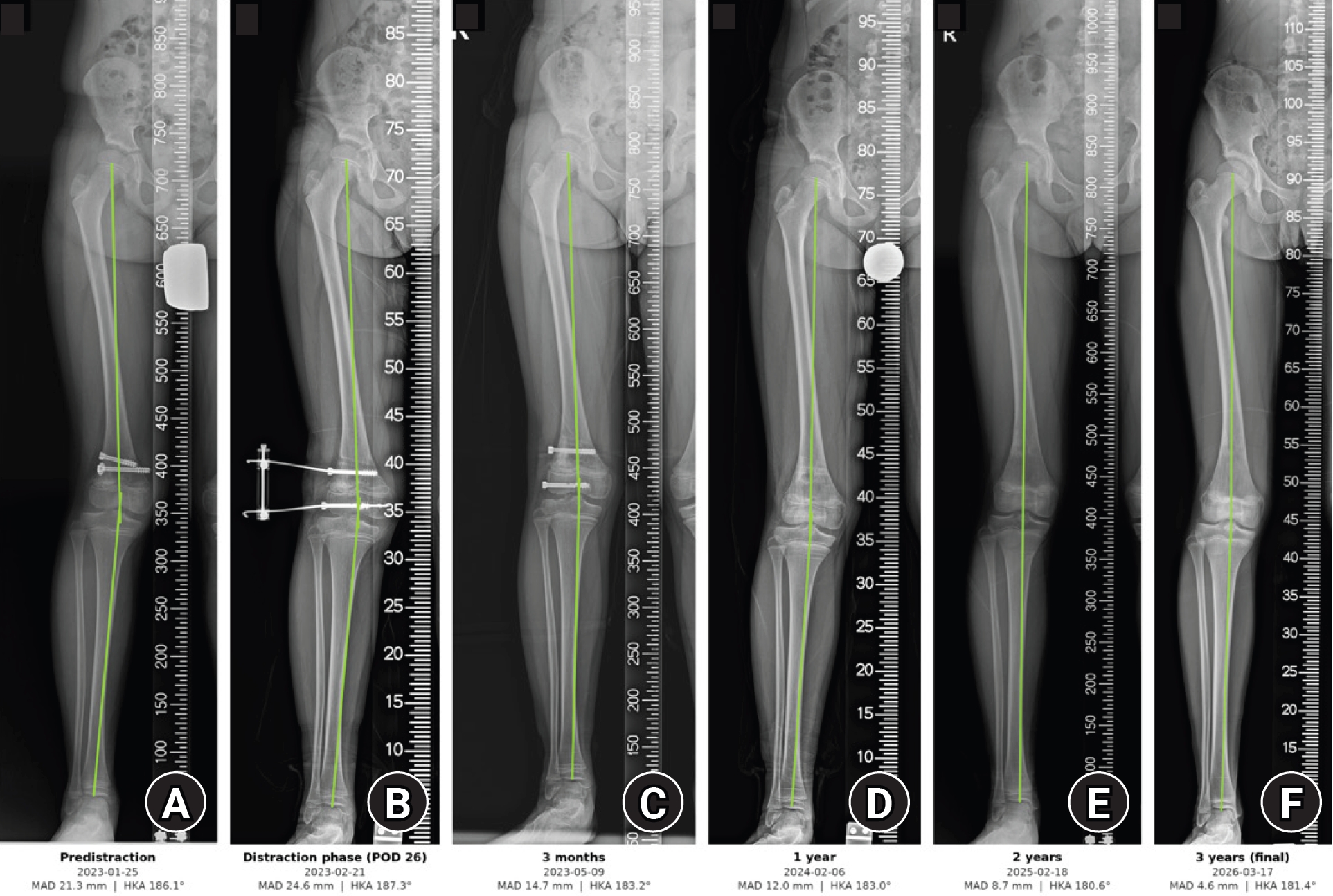
A 10-year-old boy developed a posterolateral distal femoral physeal bar (bar-to-physis ratio, 14.91%) with progressive genu valgum 6 months after fixation of a Salter-Harris type II fracture; the mechanical axis deviation (MAD) had increased to 21.3 mm. Because resection of small bars can still be followed by substantial risks of recurrence and reoperation, distraction epiphysiolysis was selected to disrupt the bar while preserving the growth plate rather than excising it. After removal of the fixation screws, distraction screws were placed in the epiphysis and metaphysis and connected to an external fixator, and distraction was performed at 1 mm/day and continued at outpatient visits (total, 9.5 mm). At 3 months, computed tomography showed that the bar had decreased to 3.01%, and 2-year magnetic resonance imaging demonstrated only multifocal partial closure (<10%) without recurrence of a confluent bar. Over 3 years, the mechanical axis gradually realigned (MAD decreased to 4.6 mm) with near-equal limb length (limb-length discrepancy, 0.1 mm), consistent with preserved longitudinal growth, whereas the mechanical lateral distal femoral angle changed little (80.2° to 82.0°). A bench test of six synthetic femur constructs showed a mean construct yield load of 74.74 N, a construct characteristic that does not represent the force transmitted to the physis in vivo. This case suggests that distraction epiphysiolysis may disrupt a small physeal bar and support gradual realignment while preserving limb length. Level of evidence: V.

 Cite